Don't miss our holiday offer - up to 50% OFF!

The Art of Designing Living Terrarium Structures
Creating an artistic terrarium is more than arranging plants inside glass. It is a disciplined craft built on spatial awareness, ecological logic, and visual storytelling. Each layer—from substrate to moss, from stone placement to lighting—forms a unified structure that breathes as a miniature world. Understanding these relationships transforms simple materials into sculptural, living compositions.
Defining a Terrarium as an Artistic Object
A terrarium is a controlled ecosystem, yet it also functions as a visual installation. Its purpose is dual:
• to maintain natural balance
• to express artistic intention
This duality demands a thoughtful approach. Students learn how each element affects the others, how textures communicate mood, and how micro-landscapes evoke emotion through structure rather than decoration.
Building Depth Through Layering
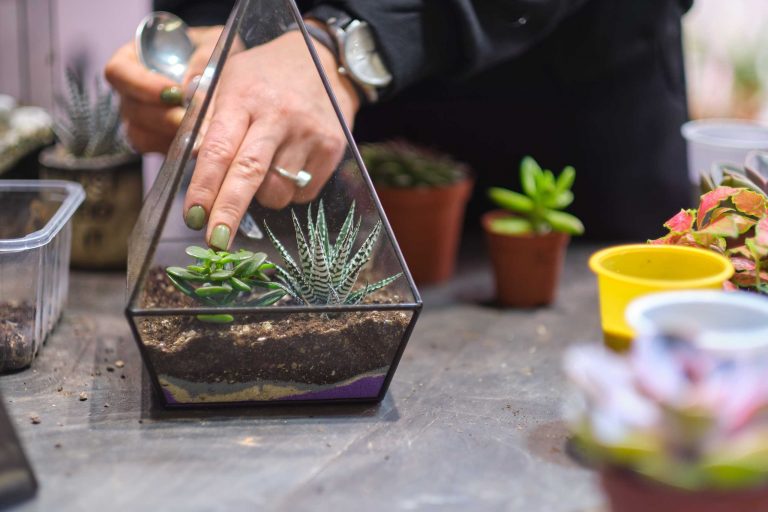
Layering creates the foundation for stability and aesthetic depth. When carefully executed, it gives the terrarium a sense of volume and quiet movement.
Key aspects include:
• soil gradients that guide humidity
• stone formations shaping flow
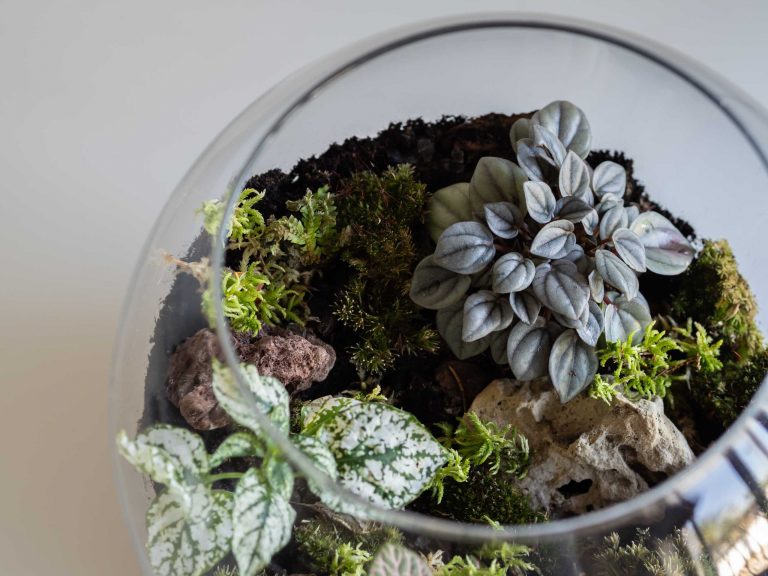
• moss levels defining atmosphere
Each decision helps the viewer read the terrarium as a narrative rather than a collection of unrelated parts.
Using Light as a Design Instrument
Light serves as both a biological requirement and an artistic tool. Soft, diffused illumination enhances natural detail, highlights texture, and shapes micro-shadows that add dramatic contrast. The balance between light and shadow often determines whether a terrarium feels alive or static.
Developing Personal Aesthetic Language
The course encourages students to explore different styles: minimalistic, forest-inspired, architectural, or abstract. Each style offers a unique framework for interpreting natural forms. With practice, students develop a visual language that reflects their identity while respecting ecological logic.
Conclusion
A terrarium is a dialogue between structure and nature. By studying composition, plant behavior, and atmospheric design, creators craft micro-worlds that feel intentional, balanced, and expressive. This is the essence of artistic terrarium craft—nature shaped through the lens of thoughtful design.